Home Security Audit Huntington Beach: What a Licensed Locksmith Actually Checks
Most homeowners think a deadbolt on the front door is enough. A licensed locksmith walks into the same house and sees eight ways in.
That gap between assumption and reality is exactly what a professional home security audit closes. Golden Locks, Inc. has conducted these audits for Huntington Beach homeowners since 2008, and the findings are almost always the same: the front door is fine, but a side window, garage entry, or interior hollow-core door is not.
This guide explains every checkpoint a licensed locksmith covers during a residential security audit — and why each one matters specifically in HB.
Why Huntington Beach Homeowners Should Take This Seriously
Huntington Beach has a property crime rate of 1,217 per 100,000 residents, which runs higher than the national average in certain neighborhoods. Downtown HB carries a burglary rate of 4.13 per 1,000 residents, and the northwest parts of the city log roughly 122 incidents per year. Huntington Harbour has seen targeted burglary campaigns where thieves cased homes in rented vehicles, entered through second-floor windows or rear doors, and were in and out before alarms were acknowledged.
The break-in pattern HBPD has documented consistently: suspects enter through side or rear windows, strike between 7 p.m. and 11 p.m. when properties look unoccupied, and take small, high-value items like jewelry. None of those entries required defeating a deadbolt. They exploited windows, lightweight frames, and blind spots — all things a security audit would flag.
What Is a Home Security Audit?
A home security audit is a systematic, room-by-room physical inspection of every entry point, locking mechanism, frame, hinge, lighting condition, and access control weakness on a residential property. It is performed by a licensed locksmith — not a sales rep, not a security alarm company trying to upsell a monitoring plan.
Golden Locks, Inc. holds CA Locksmith License #LCO4446 and CA Contractor License #988707. Every audit we conduct produces a written report of vulnerabilities ranked by severity, with upgrade recommendations that are hardware-specific and cost-transparent. You do not need to buy anything on the spot.
The 8 Areas a Licensed Locksmith Inspects
1. Entry Doors — Frame, Hardware, and Strike Plate
The front door gets the most attention from homeowners but rarely fails at the lock itself. It fails at the frame.
A licensed locksmith checks:
- Door material — solid wood or steel core only. Hollow-core exterior doors can be breached with a single kick.
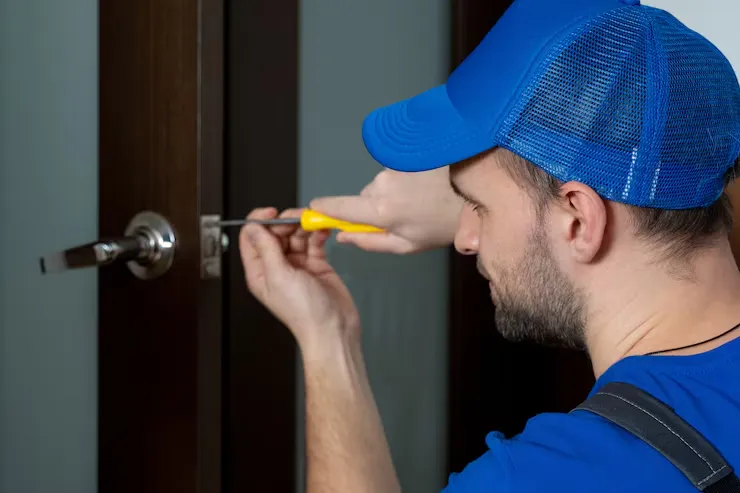
- Strike plate and screws — this is where most residential doors fail. A standard strike plate is held by ½-inch screws driven into soft door casing. A forced entry takes under 10 seconds. The correct installation uses a heavy-gauge reinforced strike plate with 3-inch screws driven into the structural stud behind the jamb. Golden Locks, Inc. installs strike plate reinforcement on nearly every audit in HB because builders rarely spec it correctly.
- Deadbolt grade and throw — a deadbolt must extend a full 1-inch bolt into the frame to be effective. We verify the ANSI/BHMA grade of installed hardware. Grade 2 meets the residential minimum; Grade 1 is required for doors that see high exposure or sit in areas with elevated property crime. Grade 1 deadbolts are tested to 250,000 operational cycles and must survive 10 simulated forced-entry strikes under BHMA testing protocol.
- Door gap and alignment — a misaligned door creates enough play that the deadbolt never fully seats into the strike box, even when locked.
- Hinge placement and fasteners — exterior-facing hinges without security studs can be popped off without touching the lock.
Back doors and side doors get the same inspection. In HB, these are consistently the weakest points on single-family homes — especially in neighborhoods like the Bolsa Chica area and along the Gothard corridor where older construction is common. If you’ve recently moved into one of these homes, see our guide on why you should change your locks before you unpack — a fresh deadbolt does nothing if the strike plate behind it was never upgraded.
2. Windows — Latches, Glass, and Secondary Locks
HBPD’s documented break-in reports cite window entry as the dominant method in residential burglaries. A standard window latch provides almost no resistance. A licensed locksmith evaluates every operable window for:
- Latch quality and engagement depth — most factory window latches are stamped aluminum and can be defeated by flexing the frame or sliding a tool between sashes.
- Sash pin or key-operated secondary lock — a pin lock through the sash adds meaningful resistance at almost zero cost.
- Window position relative to landscaping and sightlines — a window obscured by hedges or blocked from street view is a higher-risk opening. Golden Locks, Inc. notes these in the audit report with specific addressing by window location.
- Sliding windows and doors — these have two failure points: the latch and the track. A security bar in the track prevents forced slide. A secondary bolt prevents lifting. We check both.
- Second-floor windows — the Huntington Harbour burglary pattern shows that second-floor access via balconies, patio furniture, or low rooflines is actively exploited. We check the accessibility of every second-floor opening.
3. Garage — The Door Most People Forget to Audit
The garage is statistically one of the most common burglary entry points in residential properties, and it is consistently under-secured. A security audit covers:
- Garage door emergency release cord — this cord is designed to be pulled by hand from inside during a power outage. With a wire hanger and 10 seconds, someone can reach it through the top weatherstripping gap and release the door from outside. We check the gap size and recommend a release cord shield if this vector is present.
- Interior door from garage to living space — this door is often hollow-core and equipped with a passage knob but no deadbolt. It should be treated identically to an exterior front door: solid core, Grade 2 or Grade 1 deadbolt, reinforced strike plate.
- Overhead door panel condition — warped, cracked, or aged panels lose structural integrity and can be breached without a tool.
- Keypad and remote security — we check whether rolling-code technology is in place. Fixed-code remotes manufactured before 1996 can be cloned with a code grabber.
4. Sliding Glass Doors
Most Huntington Beach homes have at least one sliding glass door to a patio or backyard. These are among the weakest points on any residential property because the lock is a latching mechanism, not a deadbolt, and the door can often be lifted off its track from outside.
Golden Locks, Inc. evaluates:
- Track condition and lift clearance — if there is play in the track, the door can be lifted up and out of the frame even while latched.
- Anti-lift pins — a small pin or bolt through the track above the door prevents lifting.
- Security bar — a cut-down wooden dowel or a purpose-built security bar in the track prevents lateral sliding. We specify exact dimensions for the correct fit.
- Glass treatment — security film does not prevent glass from breaking but holds shards together, making silent fast entry nearly impossible. We note whether film is present.
5. Locks — Grade, Age, Condition, and Cylinder Integrity
Not all locks on a house are created equal. In homes that have gone through multiple tenants, renovations, or resales, locks are often a patchwork of different grades and manufacturers — some replaced, some original to the build. A licensed locksmith evaluates each cylinder for:
- ANSI/BHMA grade — we verify the actual grade of every installed lock, not just whether it looks solid. Grade 3 hardware, which only survives 2 forced-entry strikes in BHMA testing, is common on secondary doors and windows.
- Key control — standard Schlage and Kwikset keyways can be duplicated at any hardware store without verification. We identify whether any current keys on the property could have been copied by former tenants, contractors, or cleaning services, and recommend rekeying or a restricted keyway system where warranted.
- Pin tumbler wear and picking resistance — older cylinders develop wear patterns that reduce effective key combinations. We check for cylinder wobble, worn springs, and binding that indicates age-related degradation.
- Smart lock compatibility and existing wiring — for clients considering smart lock installation, we assess whether the door prep, backset, and electrical access support a keypad or app-controlled lock without forcing a non-standard fit.
Golden Locks, Inc. installs and services Schlage, Kwikset, Baldwin, and several commercial-grade lines through our showroom at 16371 Gothard St, Suite G in Huntington Beach. Homeowners can see and handle hardware before choosing.
6. Exterior Lighting and Camera Coverage
A locksmith audit is not just about hardware. Physical deterrence includes lighting and visibility. We walk the full exterior perimeter after dark (or assess it against photos and site conditions) to identify:
- Dark approach zones — areas where someone can reach a door or window without ever passing through illuminated space. Side yards and rear fence lines are the most common blind spots in HB single-family homes.
- Motion-activated light placement — lights positioned at the front door illuminate the front of the home but miss the most common entry points on the side and rear.
- Camera field of view gaps — if the property has existing cameras, we note whether the garage door, side gate, and back yard are all covered, or whether cameras only face the street. For homeowners weighing a full system, our business security services team also designs residential-grade CCTV and camera coverage as part of larger property upgrades.
- Landscaping that creates concealment — dense hedges, tall shrubs, and tree canopies near windows and doors give an intruder cover. We note these as situational vulnerabilities, not just hardware gaps.
7. Access Control — Who Has Keys, and Are They Trackable?
Key control is one of the most overlooked residential security issues. Over time, houses accumulate distributed keys: family members, former housekeepers, previous tenants, contractors who were never asked to return the key.
During an audit, Golden Locks, Inc. asks:
- How many keys to this property exist, and where are they?
- When was the property last rekeyed or re-keyed after a tenant change?
- Do any current locks use a standard keyway duplicated at retail stores?
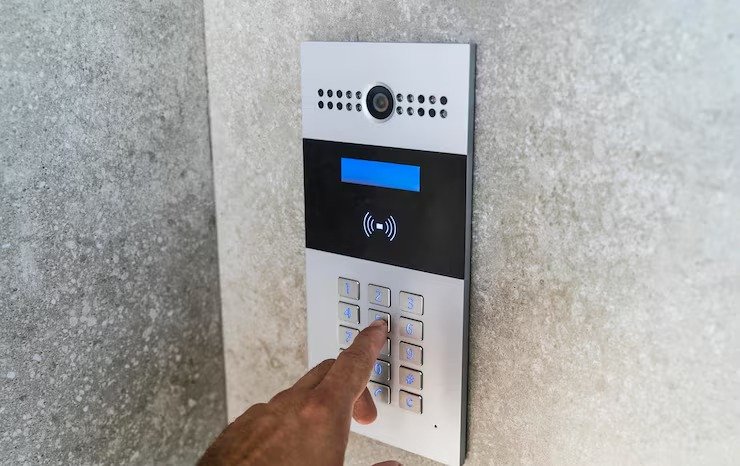
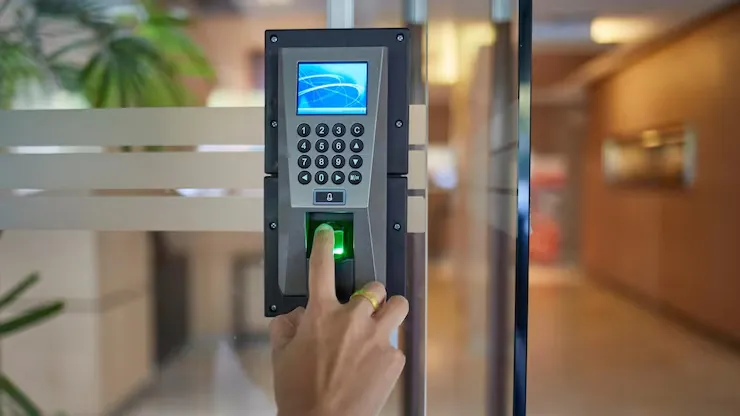
For clients who want tighter control, we recommend rekeying on a documented schedule, upgrading to a restricted keyway that requires authorization for duplication, or transitioning exterior doors to smart locks with access logs. A smart lock does not give better mechanical security than a Grade 1 deadbolt, but it gives complete audit visibility: every code use, every time, with no physical key to lose or copy.
8. Safes and Interior Valuables Storage
High-value items — jewelry, cash, firearms, documents — require a second layer of protection beyond the perimeter. The Huntington Harbour burglaries included cases where thieves physically ripped safes off walls, because the safes were light-gauge models bolted to drywall rather than structural anchoring.
Golden Locks, Inc. evaluates:
- Safe anchoring — a safe bolted through drywall into a stud provides meaningful resistance. A safe bolted only into drywall does not.
- Safe gauge and relocking device — consumer-grade safes rated under UL RSC (Residential Security Container) standard provide approximately 5 minutes of resistance. We note the safe rating and whether the anchoring method matches the value being stored.
- Firearm storage compliance — California law requires secured storage for firearms in homes where minors may be present. We verify storage meets this requirement.
If your audit flags an under-anchored or outdated safe, our safe and vault services team handles non-destructive opening, anchoring upgrades, and dial-to-keypad conversions across Huntington Beach and Orange County.
How Long Does a Home Security Audit Take?
A complete residential security audit from Golden Locks, Inc. takes 45 minutes to 90 minutes depending on the size of the home. Larger properties with multiple entry points, detached garages, and ADUs take longer. At the end of the walk-through, you receive a written vulnerability report with a hardware recommendation list, each item flagged by priority (immediate, medium-term, and optional upgrade).
There is no obligation to purchase. The audit is a professional assessment, not a sales appointment.
How Much Does a Home Security Audit Cost in Huntington Beach?
Golden Locks, Inc. charges a flat fee for a residential security audit. For a sense of how we price locksmith work generally, see our breakdown of locksmith costs in Huntington Beach. Contact us directly at (657) 200-1788 or visit our showroom at 16371 Gothard St, Suite G in Huntington Beach, CA 92647 for current pricing. We serve all HB ZIP codes including 92605, 92615, 92646, 92647, 92648, and 92649, plus neighboring cities including Fountain Valley, Westminster, Seal Beach, and Cypress.
Is a Home Security Assessment Worth It?
A home security audit is worth it if you have never had one, recently purchased a home, changed tenants, or live in an area with documented property crime patterns. In Huntington Beach specifically, the most expensive break-ins have not been forced deadbolt defeats — they have been window entries, second-floor balcony access, and garage door exploits that a $0 audit conversation would have flagged.
Golden Locks, Inc. has held CA Locksmith License #LCO4446 since 2008. Our technicians are not subcontractors. Every audit is conducted by a member of our permanent staff, and every recommendation is documented in writing before any work is proposed.
Frequently Asked Questions
What does a home security audit include?
A home security audit from a licensed locksmith includes a physical inspection of every exterior door, window, garage entry, sliding glass door, exterior lighting condition, lock grade and key control status, safe anchoring, and access history. Golden Locks, Inc. provides a written report ranking vulnerabilities by severity after every audit in Huntington Beach and surrounding Orange County cities.
How often should I get a home security audit in Huntington Beach?
Most residential security experts recommend a home security audit every 2 to 3 years, or any time you move into a new property, complete a renovation, change household staff, or experience a nearby break-in. Huntington Beach homeowners in higher-activity neighborhoods — including Downtown HB and Huntington Harbour — benefit from more frequent reviews given the documented property crime patterns in those areas.
Do I have to buy new locks after a security audit?
No. A security audit from Golden Locks, Inc. is an assessment, not a sales appointment. You will receive a written report with recommendations. Some findings require immediate hardware replacement; others are configuration fixes that cost nothing. You decide what to act on and when.
What is the difference between rekeying and replacing a lock?
Rekeying changes the internal pins of an existing lock cylinder so that old keys no longer work. Replacing a lock installs entirely new hardware. Rekeying costs significantly less and is the right choice when the existing hardware is in good condition but key control has been compromised. Replacement is warranted when the hardware is damaged, below Grade 2 specification, or the homeowner wants to upgrade to smart lock capability.
Can a licensed locksmith install smart locks during a security audit?
Yes. Golden Locks, Inc. installs smart locks across all major HB neighborhoods including Huntington Harbour, Old Town, Five Points, and Seacliff. During the audit, we assess door prep compatibility and recommend specific models. Smart locks with rolling encryption and access logs add convenience and audit visibility without reducing the mechanical security of a properly installed Grade 1 or Grade 2 deadbolt.
How do I find a licensed locksmith near me in Huntington Beach?
Call or visit Golden Locks, Inc. directly. Our showroom is at 16371 Gothard St, Suite G in Huntington Beach, CA 92647. We hold CA Locksmith License #LCO4446 and CA Contractor License #988707, and have operated in Huntington Beach since 2008. We cover all HB ZIP codes and serve Costa Mesa, Fountain Valley, Garden Grove, Seal Beach, and Westminster. See our full service area for coverage details, or call our emergency locksmith line if you need same-day dispatch.
Golden Locks, Inc. | 16371 Gothard St, Suite G, Huntington Beach, CA 92647 | (657) 200-1788 | CA Locksmith License #LCO4446 | CA Contractor License #988707