
Short answer: do not move a large safe yourself. A mid size gun safe often weighs several hundred pounds, and bigger ones can pass a thousand. The risk is not only a hurt back. It is a crushed foot, a cracked staircase, a gouged floor and a safe that no longer closes properly. Here is what it takes to move a safe in Orange County, what usually goes wrong, and how to hire the right crew.
Why a safe is not like other heavy furniture
A safe is dense, top heavy and awkward. The weight sits in a small footprint, so it concentrates on a few points of the floor. It has no good place to grip. And once it starts to tip, nobody can stop it. A fridge or a piano at least has a shape that movers are used to. A safe punishes small mistakes.
What usually goes wrong
- Injuries. Safes tip, slide off dollies and pin people against walls and door frames.
- Floor and stair damage. Concentrated weight can crack tile, dent hardwood and damage stair treads.
- Damaged doors and bolts. Lifting a safe by the door or dragging it can bend the door, the hinges or the locking bolts.
- Lock problems. A hard knock can affect a keypad, a dial or an electronic lock. If the safe will not open afterward, see safe lock repair or safe opening.
- Getting stuck. A safe that fits through the front door may not clear a hallway corner or a stairwell turn.
What professional safe movers bring
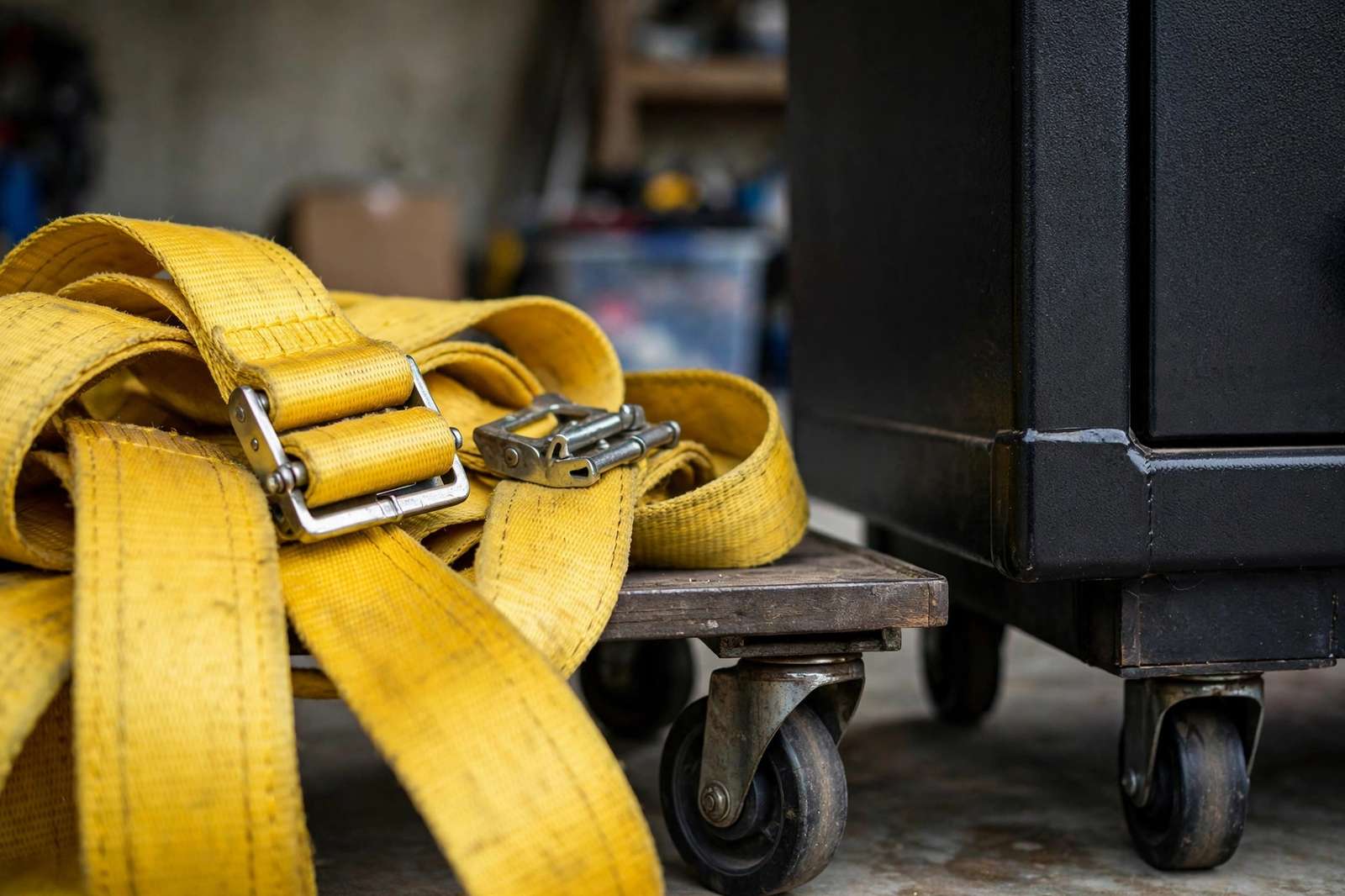
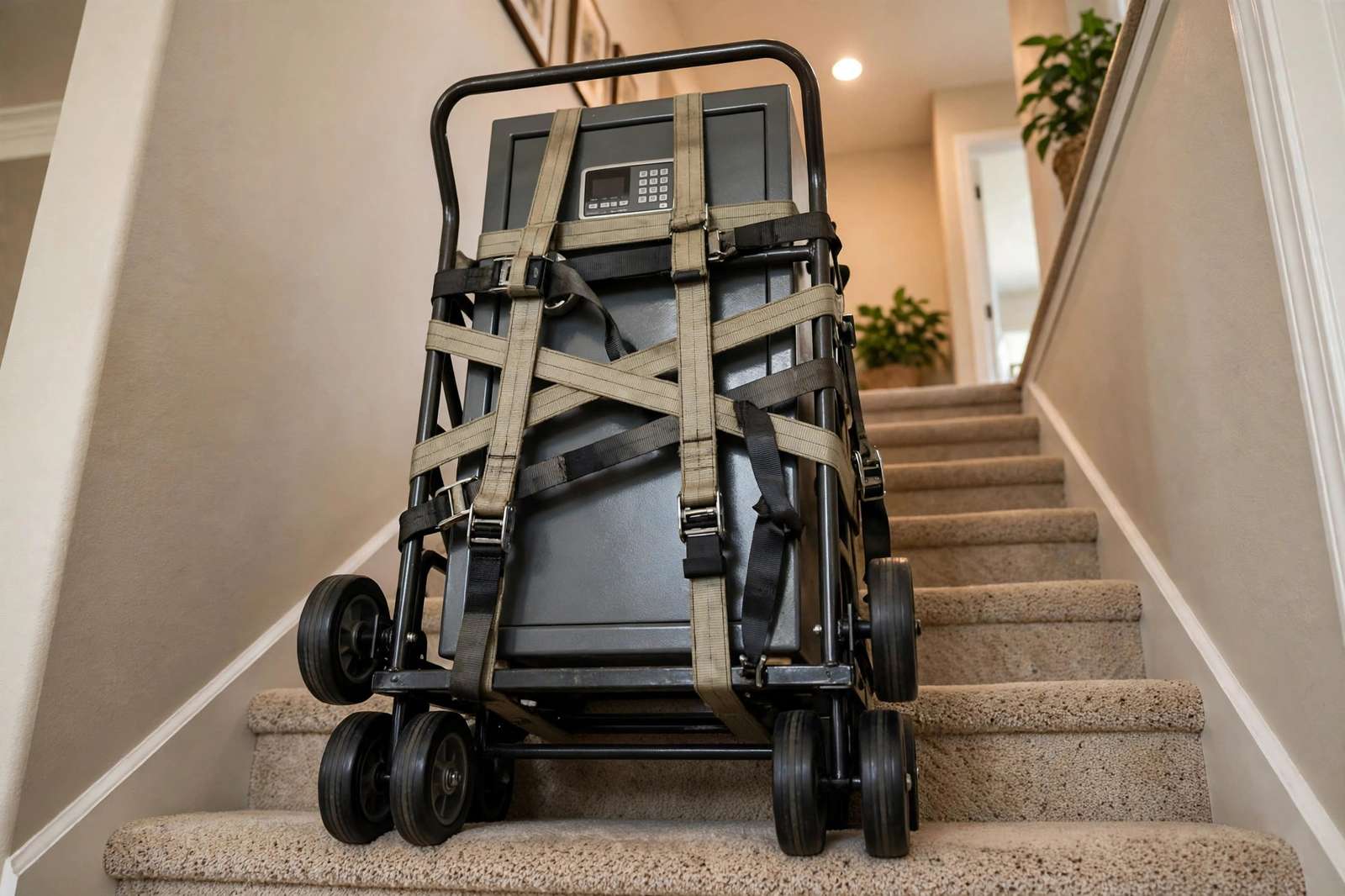
The difference is equipment and practice. A trained crew uses heavy duty dollies and ramps, lifting straps, floor protection, and stair climbing equipment where stairs cannot be avoided. They plan the route before they lift, and they know how to keep the weight low and balanced. That is how a safe goes from a garage to a second floor room without damage to the safe or the house.
A checklist before moving day
- Measure everything. Safe width, depth and height, then every door, hallway and stairwell on the route. Include the turns.
- Know the weight. It is on the label or in the manual. If you cannot find it, tell the mover the make and model.
- Check the new location. A garage slab handles weight well. An upstairs room or an older wood floor may not.
- Empty the safe. Take out valuables and papers. For firearms, follow all California rules for storing and transporting them.
- Find out if it is bolted down. A bolted safe has to be unbolted before it moves, and it should be anchored again in the new spot.
- Ask your building or HOA. Many Orange County condos and townhomes have rules about elevators, loading areas and moving hours.
- Clear the path. Move cars, plants and furniture, and open every door the crew will use.
Questions to ask before you hire safe movers
- Have you moved this type and weight of safe before?
- Are you insured, and can I see proof?
- Will you look at photos or visit first to check stairs and access?
- Does the estimate include unbolting and re-anchoring, and any extra charge for stairs?
- What happens if something is damaged?
A mover who gives a price without asking about stairs, weight or access is guessing, and guesses get expensive on moving day.
What affects the price of moving a safe
There is no single price because every move is different. The main factors are the weight and size of the safe, the number of stairs and tight turns, the distance, the number of workers needed, and whether the safe needs to be unbolted and anchored again. Ask for the estimate in writing so you know what it covers.
Moving a safe in Huntington Beach and across Orange County
Local moves have their own problems. Many Huntington Beach condos and townhomes have narrow stairs, tight turns and rules about moving days. Houses near the coast often have garages that open to alleys or steep driveways. A move to Irvine, Costa Mesa or Anaheim may add distance and parking issues. This is why a quick look at photos before the quote matters. Our safe moving in Orange County service covers local moves, and we can also help with the lock afterward.
After the move
Once the safe is in place, test the lock several times with the door open and closed. Check that the door swings freely and that the bolts move smoothly. Anchor the safe if it was bolted before. If anything feels different, get it checked before you trust it with valuables.
Not all safes move the same way
- Gun safes: tall, heavy and top heavy, and often bolted to a floor. They need the most planning.
- Fire safes and document safes: lighter, but the fire insulation makes them heavier than they look, so do not treat them like a small box.
- Floor and wall safes: these are built into concrete or a wall. Removing one is construction work, not just moving.
- Commercial safes and vaults: very large and often need special rigging, so plan well ahead.
Why a regular moving company is not always the right fit
Many moving companies avoid safes, cap how much weight they will handle, or do not cover safes in their insurance. That is not a criticism of the movers. It is simply a specialty. If a mover says they can handle a safe, ask about the weight limit, the equipment and the coverage in writing.
Getting the safe ready
Close and lock the door before the move and keep the key or the combination with you, not packed in a box. If the safe is bolted down, take a photo of the anchor spots so the crew can anchor it again in the same place. Write down the make and model so the crew can look up the weight and any moving instructions from the manufacturer.
Frequently asked questions
Can I move a safe myself with a few friends?
You can try, but this is where most safe moving injuries and damage happen. If the safe is small and has no stairs on the route, it may be possible. For a large or heavy safe, it is worth hiring a crew.
Should I take the door off the safe?
Usually not. Removing a door can reduce weight on some models, but it can also damage the hinges and the locking mechanism. Let a professional decide.
Do I need to empty the safe before it is moved?
Yes. Contents add weight and can shift, and moving valuables yourself is safer than trusting them to a move.
What if the safe will not open after the move?
Do not force it. A locksmith can open the safe and repair the lock without drilling in many cases.
Talk to Golden Locks, Inc.
Planning to move a safe, or need a safe lock checked after a move? Golden Locks, Inc. is a licensed, family owned locksmith based in Huntington Beach and serving all of Orange County since 2008. Call (714) 841-0141 or visit goldenlocks.net. You can find us at 16371 Gothard St G, Suite G, Huntington Beach, CA 92647.